During the past years, I have studied Human-Computer Interaction at the University of Oslo's Department of Informatics. As a box-fresh user researcher, interaction designer and master of science in technology, I am seeking to understand the relations and potential between humans and our surroundings.
I have been working part-time during moste of my studies and a complete resume and further information about my past work can be viewed at:

Some of my work:
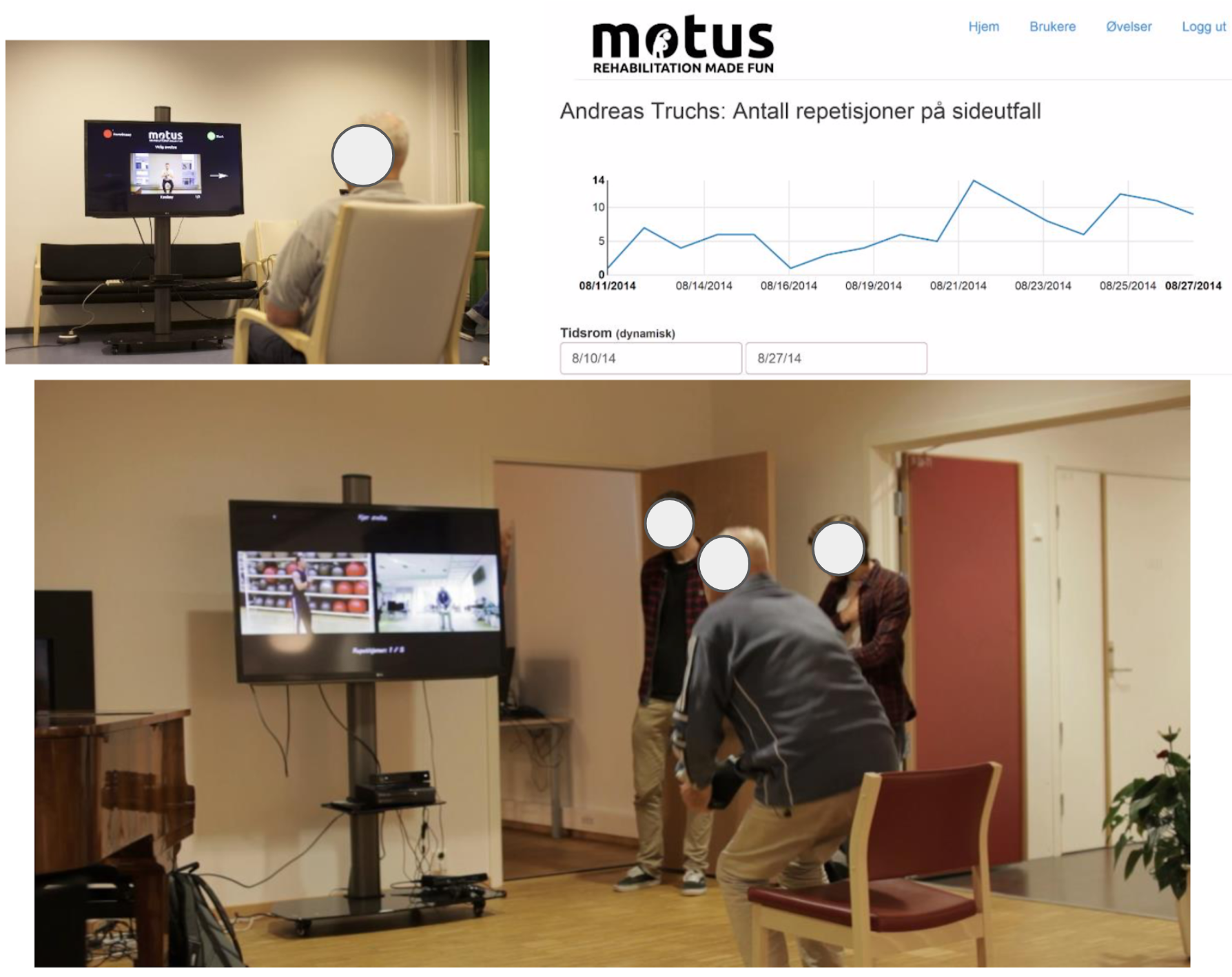
The creation of a service supervising the elderly during their exercise routines while providing reliable data to their physiotherapist. With the goal of exploring the potential of Microsoft Kinect v2 along with various soft- and hardware technologies as a means to increase levels of activity particularly amongst the elderly. Four students, including myself, collaborated over a period of 3 months together with physiotherapists and an abundance of voluntaries at two retirement homes to understand the challenges of exercise and rehabilitation for the elderly.
Learning about:
- Mobility impairment
- Physiotherapists work with mobility impairments
- Interactive systems and physical exercise
Techniques:
- observations
- interviews
- stakeholder interviews
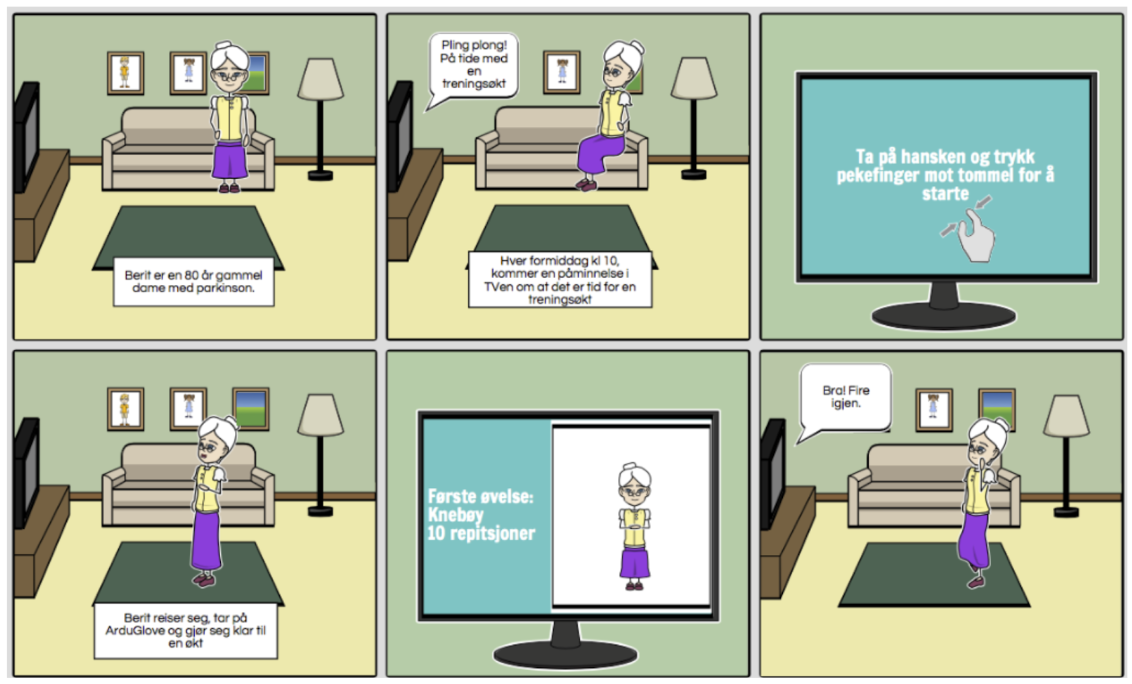
- storyboarding
- usability testing
- data analysis
Deliverables:
- Prototypes
- Report
Outcomes:
We created a working prototype allowing residents at an elderly center to get live feedback on their execution of a given exercise. As well as providing their physiotherapists with reliable data on both execution quality and amount of exercises done via a webservice.
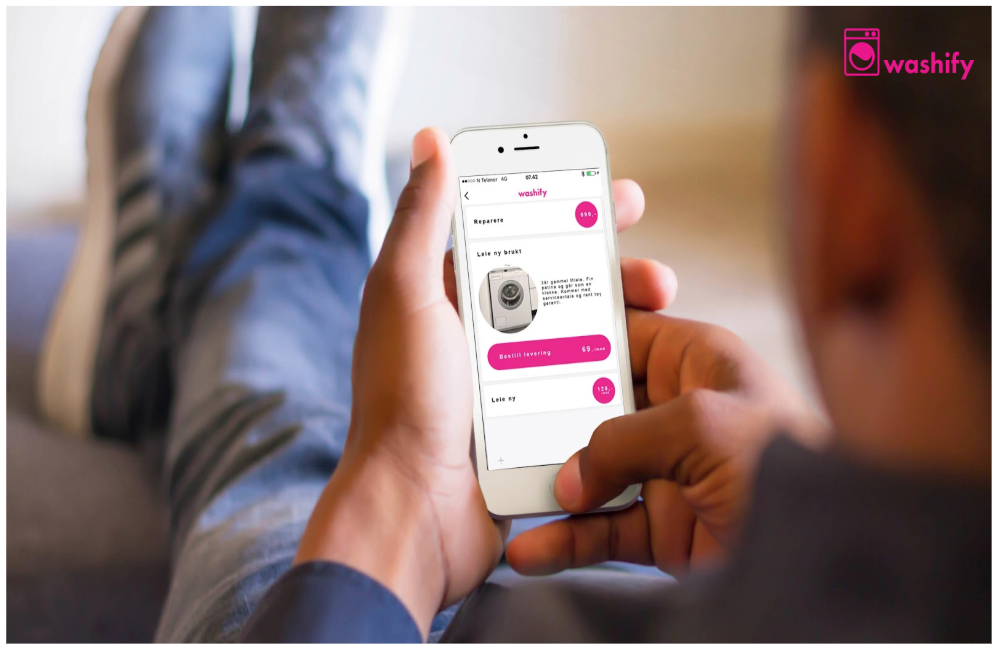
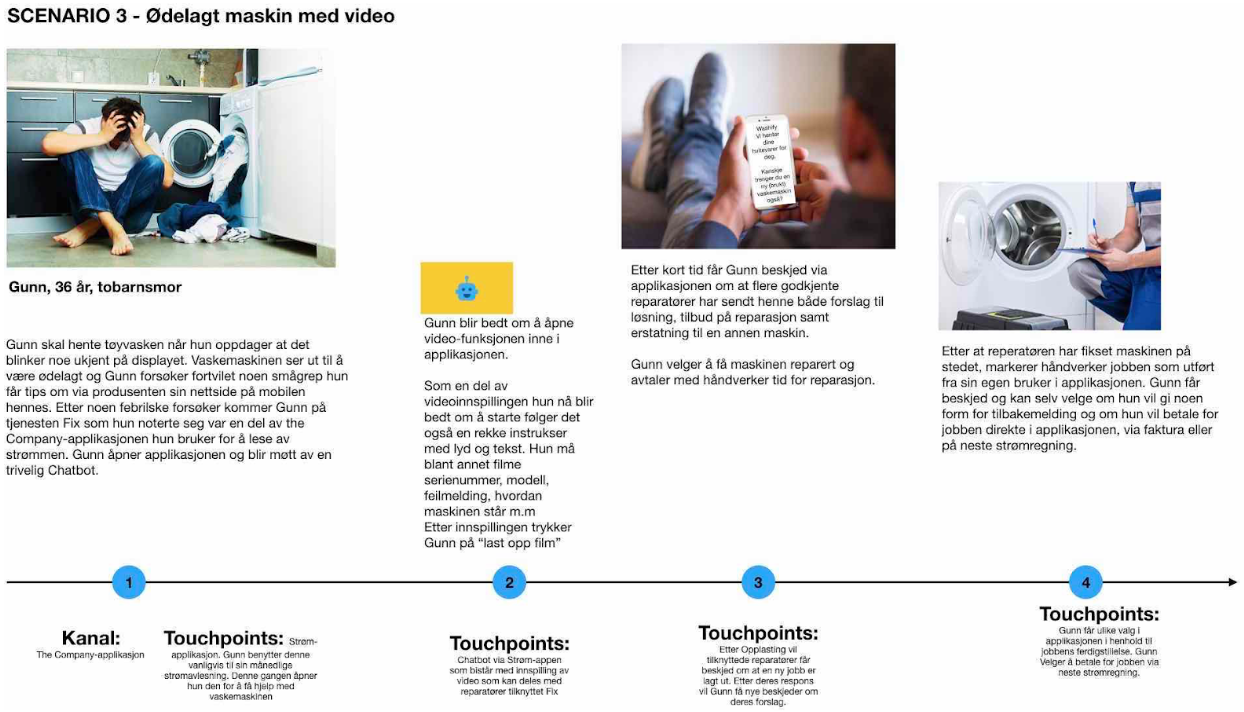
Voluntary work together with 8 additional participants in a project directed by FolkOslo in an effort to convince various companies of the potential of an outsiders point of view of the companies business opportunities within the circular economy. During a period of six weeks, with about twelve meetings after regular working hours. The team met to discuss various data gathered between the meetings. Based on our data gathering, interviews and workshops we suggested a service where Fortum could possibly guarantee for a complete lifecycle of a given washing machine.
Learning about:
- Fortum’s work and market position
- Circular economy
- Leasing
- Recycling
- Habits regarding breakdowns and recycling
- Managing workshops
Techniques:
- questionnaires
- interviews
- workshop
- storyboarding
- journey mapping
- scenarios
- personas
Deliverables:
- concept
- Report
- Presentation of our concept for the minister of trade and industry
Outcomes:
Based on our initial data gathering the group identified several points of interests. During a workshop that I, as the only participant familiar with conducting workshops, managed a session inspired by utilizing personas, journey mapping and storyboarding to ideate and create various suggestions for Fortum. My main experience was in relation to working in a group with participants of diverse backgrounds and experience. As well as conducting a workshop single handedly with group members without any particular knowledge of similar work practice.
Participatory design with visually impaired
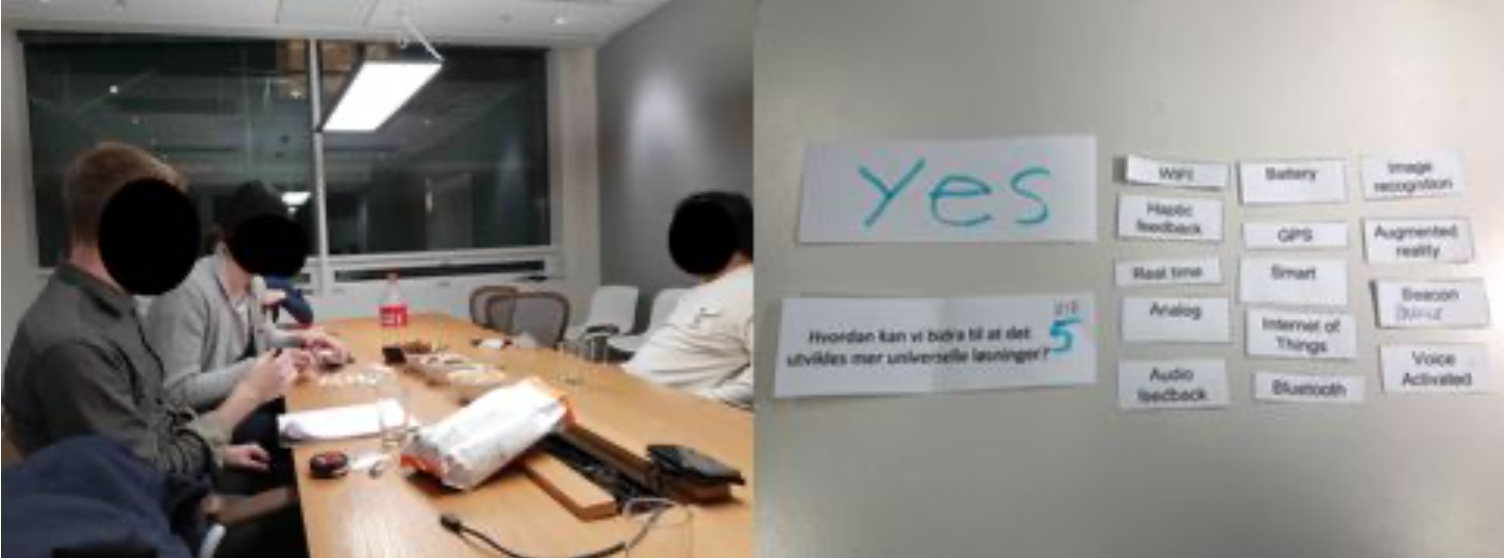
During a period of 3 months, I was part of two projects with a combined goal of utilizing participatory design in an effort to get a comprehension of what it implies to bring the user along as a co-designer. With the overall goal of applying participatory design, each of the projects had their own specific sub-focus of mobility and design processes with a particular focus on balancing an assumed gap between user and designer.
Learning about:
- Participatory design, design thinking
- Facilitating workshops with visually impaired as co-designers
- Technological opportunities within mobility for visually impaired
- Beacon and Object detection technologies
Techniques:
- future workshop
- interviews
- design thinking’s “How might we”
- storytelling
- card based elimination
- programming
- prototyping
Deliverables:
- Prototypes
- Reports

Outcomes:
In a designerly-perspective I got a unique experience through our effort of adjusting techniques and practices in a suitable manner to let visually impaired be an equal part of the whole process. As a result of this I also got an exciting opportunity to get familiar with both universally unique identifiers (UUID) to direct information and trigger certain behaviors between a Raspberry Pi and a smartphone. As well as, Google’s TensorFlow Object Detection API and the OpenCV library to detect objects through a computer’s camera.
Research through Design - Transition Design
As a part of my master's thesis, I wanted to get a better notion of what Transition Design could bring along in an effort to design for a sustainable future. We were four students collaborating on various angles and ideas based on several workshops inspired by Transition Design and its focus on futures.
Learning about:
- Research through Design, Transition Design, Affective Design
- Designing with intentional affective values, particularly conformity
- Futuring
- Designing with and for nature
Techniques:
- workshops
- futuring
- card game “The thing from the future”
- storytelling
- moodboards
- personas
- prototyping
- soldering
Deliverables:
- Prototypes
- Report
Outcomes:
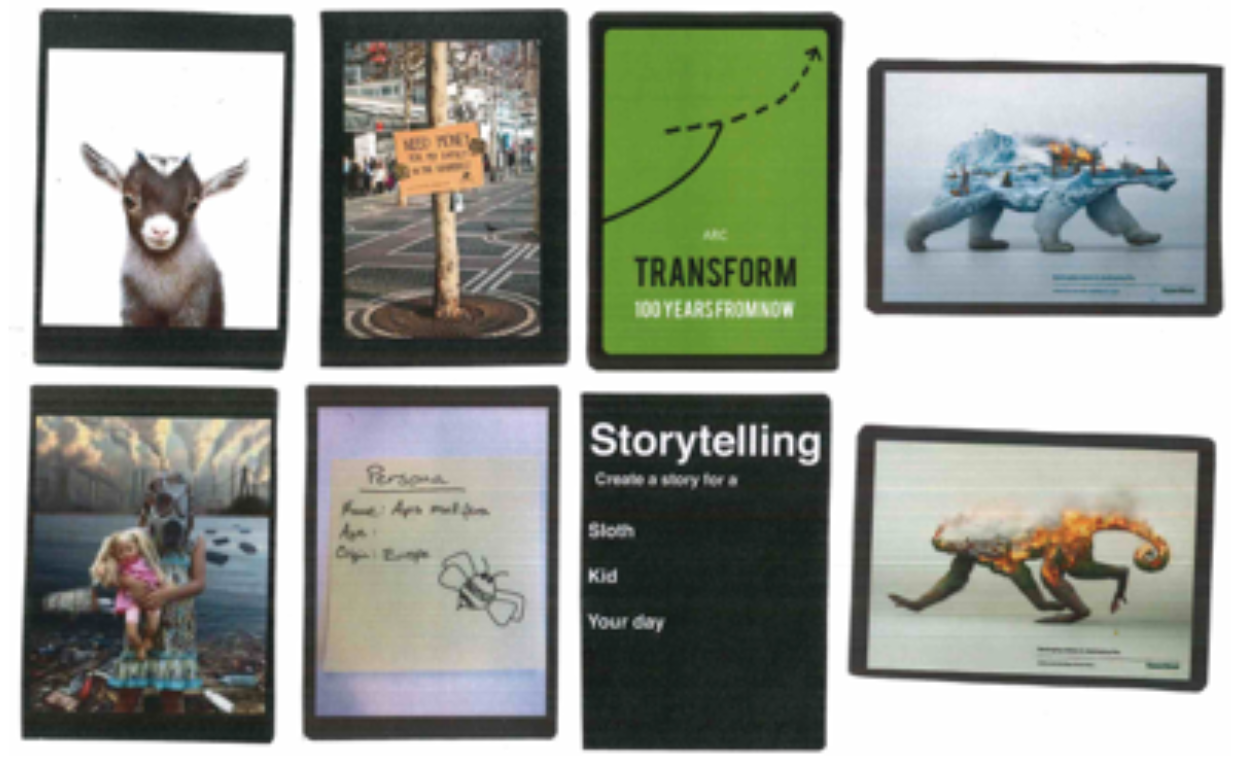
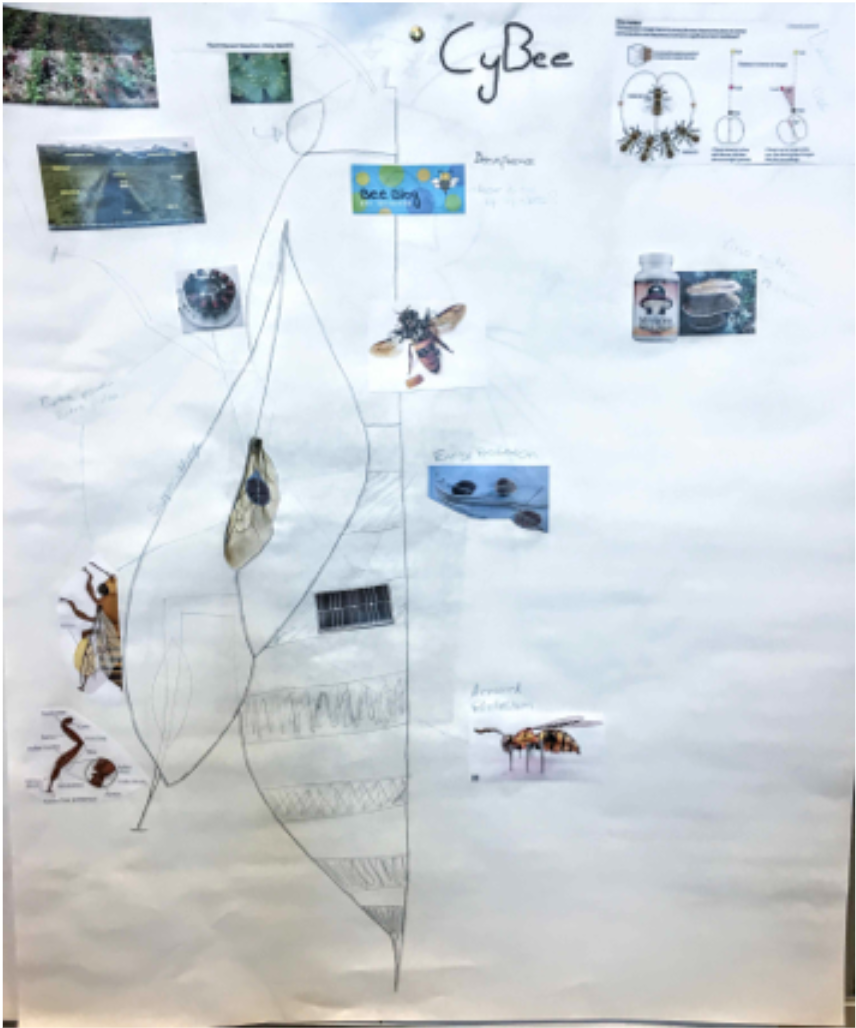
I re-designed a card game known as “The thing from the future” by adding a few extra sources of influence by providing pictures of “end of the world”-scenarios as well as for instance asking the participants to create personas of animals in given future scenarios based on the images added to the game. In addition to this, the group created various moodboard and personas-inspired tools in an effort to design for certain future humans and natural things, in particular, the bees in this project. Based on the bee-personas/moodboard we designed a suggested network of a beekeeper-community where sensor-technology should provide a voice for the bees, as such the beekeepers could provide needed support.